


CAPE CHARLES, Va. — The Town of Cape Charles is continuing to explore the potential acquisition of the former Canonie Atlantic railyard, a move that could give the Town greater control over the future development of a significant property connecting key areas of the community.
No final decision to purchase the property has been made. Town officials are currently conducting research and due diligence intended to determine whether an acquisition would be financially feasible and in Cape Charles’ long-term strategic interest.
That review includes examining property appraisals, boundaries and possible exclusions from a potential acquisition, along with title and lien issues. Environmental disclosures and questions surrounding responsibility for any necessary remediation are also being investigated.
The findings will ultimately help the Cape Charles Town Council determine whether acquiring the former railyard represents an appropriate investment for the community.
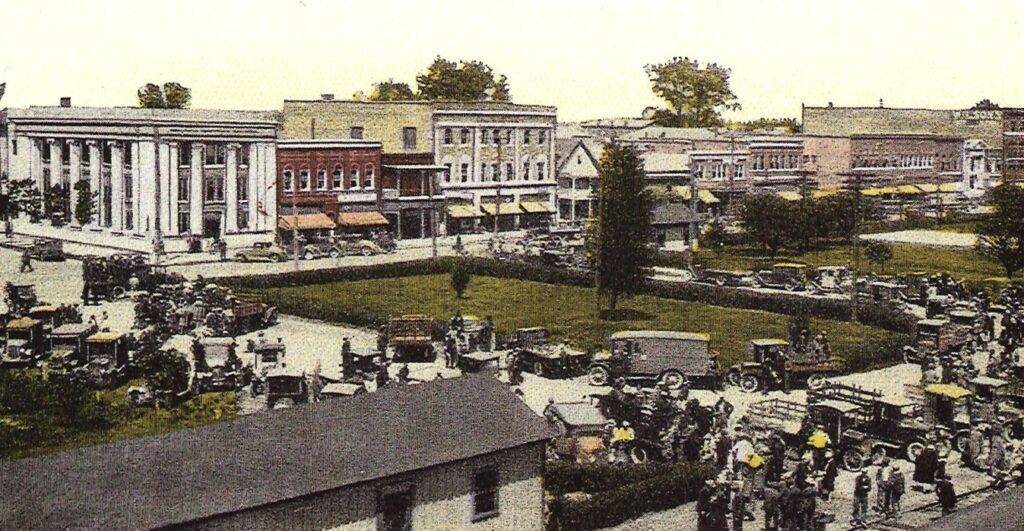
The Town’s interest extends beyond simply owning the property. Acquisition could provide Cape Charles with considerably more influence over how and when the former industrial property is eventually developed.
Among the Town’s stated objectives is maintaining greater control over the pace and appropriate phasing of future development while completing a Master Plan for the property. Recommendations from that planning process could then be incorporated into future zoning and development decisions.
Parking is another significant consideration.
Town ownership could provide an opportunity to permanently secure public parking as well as harbor-related parking, including spaces for vehicles with boat trailers. Parking availability has become an increasingly important issue as Cape Charles has grown as both a residential community and visitor destination.
The property could also play a role in reconnecting portions of the Town’s existing street and pedestrian network.
Cape Charles is examining opportunities to ensure appropriate street connections and extensions from the Historic District while creating pedestrian connections and open space extending from Strawberry Plaza through the former railyard.
Perhaps one of the most significant long-range possibilities is the creation of a public waterfront connection between the harbor and the beachfront, potentially providing a new pedestrian link between two of Cape Charles’ most heavily used waterfront areas.
The Town also wants to preserve areas within the property for public gatherings, community events and concerts.
Taken together, the objectives indicate that Cape Charles is looking at the former railyard not simply as a redevelopment parcel, but as a potentially important piece of the Town’s future transportation, recreation, waterfront access and public-space network.
For now, however, the process remains in the evaluation stage. Appraisals, environmental responsibilities, property restrictions and other financial and legal considerations will have to be weighed against those potential public benefits before the Town Council decides whether Cape Charles should move forward with an acquisition.
About the Author


The Town Council should take a very cautious approach to purchasing the former Canonie Atlantic railyard.
I want to be clear from the beginning: I am not opposed to improving the property. I am not opposed to additional public parking, pedestrian connections, open space, waterfront access, or responsible redevelopment.
The question is much simpler:
**Does Cape Charles need to own this property in order to achieve those goals—and are taxpayers prepared to assume all of the financial and environmental risks that come with ownership?**
Right now, it appears that several important questions remain unanswered.
The Town is still examining environmental disclosures, potential remediation responsibilities, title and lien issues, boundaries, exclusions and the property’s overall financial implications.
Those aren’t minor details. They are precisely the issues that determine whether a property is an asset or a liability.
A purchase price is only the beginning of the cost.
If the Town becomes the owner, taxpayers could potentially be responsible for environmental remediation, infrastructure, drainage, streets, sidewalks, parking, landscaping, maintenance, engineering, legal expenses and future improvements.
So I believe the Council should ask for a complete **10-, 20- and 30-year financial projection** before approving an acquisition.
Not just, “Can we afford the purchase price?”
But:
**What is the total expected cost of owning this property?**
And:
**What happens if those costs are substantially higher than anticipated?**
There is another important question.
The Town’s stated objectives—controlling development, requiring appropriate phasing, providing pedestrian connections, protecting parking and securing public access—can potentially be accomplished through zoning, development agreements, easements, public-private partnerships and other legal mechanisms.
So before purchasing the property, I believe the Town should demonstrate why ownership is necessary rather than simply desirable.
Greater control does not automatically justify assuming greater liability.
I would also ask the Council to consider opportunity cost.
Cape Charles has existing infrastructure and public facilities that already require significant investment. Roads, drainage, sidewalks, public safety, maintenance and other municipal responsibilities aren’t going away.
Every dollar committed to the railyard is a dollar that cannot be spent somewhere else.
If the Town believes this acquisition is a better investment than those competing priorities, then the Council should be able to demonstrate that publicly, with numbers—not just with a vision for what the property could eventually become.
And that brings me to what I believe is the most important point.
The proposed benefits are largely future possibilities.
A waterfront connection could be valuable.
Additional parking could be valuable.
Public gathering spaces could be valuable.
Pedestrian connections could be valuable.
But taxpayers would assume the costs and risks immediately, while many of the benefits may take years to materialize—and some may never materialize at all.
That creates an imbalance of risk.
If the Town proceeds, I believe the Council should first require:
1. An independent appraisal and complete acquisition-cost analysis.
2. A comprehensive environmental assessment identifying potential contamination and clearly establishing who would be responsible for remediation.
3. A legal review of all title, lien, easement and property restrictions.
4. A 10-, 20- and 30-year estimate of ownership, maintenance and infrastructure costs.
5. Identification of the funding source for those costs without relying on speculative future development revenues.
6. A comparison of municipal ownership against alternatives such as development agreements, easements and public-private partnerships.
7. A clear explanation of which public benefits are guaranteed and which are merely potential.
8. A public discussion of what existing Town projects or services could be delayed or displaced by this acquisition.
And I would ask the Council one final question:
**If this property is such a valuable public opportunity, why must the Town assume all of the risk to obtain the benefits?**
Cape Charles can support responsible redevelopment without putting taxpayers in a position where they are effectively becoming the developer, environmental risk-holder and long-term property manager.
The prudent course is not to rush into ownership simply because the property presents an attractive vision.
The prudent course is to determine whether that vision can actually be delivered at a cost the taxpayers can reasonably afford.
Until the Town can demonstrate that the acquisition is financially sustainable, environmentally responsible and necessary to achieve specific public benefits that cannot otherwise be secured, I believe the Council should **not purchase the property**.
I don’t have a strong opinion about the property but I do caution anyone who expects Town Council to act in resident/taxpayer best interest – that is just not what this Town Council does. Beware calling them out on this very issue because then they will start spending money on consultants. Observe any Town Council meeting and you will see they are slaves to the consultants.
It’s a real shame. I bet the town could use that property for good things.
Don’t worry, be happy. The most important thing is the Developer$ will profit greatly. They, and their “friends” are already on board 100%. Who cares if it turns out to be a financial blunder. Northampton County taxpayers can always bail them out.
Damn shame what has happened to Cape Charles over the last 30 years.
What happened? Articulate!
Unwanted gentrification without proper assimilation.
Word on the street is CCharles is already making plans for extending the town limits into Northampton County.
Eastville did it a few years ago to gain an extra mile or so on US13 so they could bag more shakedown cash from the traveling public.
CCharles is doing it to increase the local county Tax payers they can shakedown.
They are simply Road Pirates, nothing more, nothing less.