


CAPE CHARLES, Va. — Concerns over groundwater sustainability and rising chloride concentrations in the town’s drinking water supply have prompted a Northampton County resident to call on Cape Charles officials to take a closer look at the potential effects of continued residential development on the Eastern Shore’s limited groundwater resources.
In an October 5 letter to Mayor Adam Charney and the Cape Charles Town Council, Kenneth Duffy of Exmore presented water quality testing records and groundwater research that he said raise questions about the long-term sustainability of the region’s drinking water supply.
The letter comes amid ongoing discussions about Northampton County’s proposed zoning text amendment, ZTA 2026-001, which would permit higher-density residential development in designated areas of the county.
Duffy said a group of concerned residents has spent more than six months researching the proposal and its potential consequences for groundwater supplies.
At the center of their concerns is the Yorktown-Eastover aquifer, a critical source of drinking water for communities throughout the Eastern Shore.
Chloride Levels Raise Questions
According to laboratory records included with the letter, chloride concentrations in groundwater samples associated with the Cape Charles water tower have increased over the past two years.
The documents identify the following chloride measurements:
| Testing Date | Chloride Concentration |
|---|---|
| December 17, 2024 | 670.6 mg/L |
| December 12, 2025 | 767.7 mg/L |
| March 26, 2026 | 807.8 mg/L |
| June 11, 2026 | 900.9 mg/L |
The reported concentrations represent an increase of approximately 34% between December 2024 and June 2026.
The U.S. Environmental Protection Agency has established a secondary drinking water standard of 250 milligrams per liter for chloride. That standard addresses aesthetic concerns, including salty taste and potential corrosion, rather than establishing a federal health-based maximum contaminant level.
The measurements presented in the letter exceed that secondary standard. However, the samples represent groundwater testing associated with the water tower and should not be interpreted as measurements of finished drinking water delivered to customers.
Duffy also cited Virginia American Water’s 2025 Annual Water Quality Report, which included a chloride measurement of 214 mg/L from a sample collected in 2023.
He questioned whether the published report adequately reflects more recent groundwater conditions and called for closer examination of available testing records.
Development and Saltwater Intrusion
Beyond water quality, Duffy’s letter raises concerns about the potential effects of increased groundwater withdrawals associated with new residential development.
He pointed to an August 5 presentation to the Northampton County Board of Supervisors, during which county officials and consultants discussed the proposed zoning amendment and groundwater availability.
According to the letter, county officials expressed confidence that groundwater regulations administered by the Virginia Department of Environmental Quality would protect existing water supplies.
Duffy challenged that assurance, arguing that regulatory oversight does not eliminate the potential for long-term groundwater depletion or saltwater intrusion.
The letter also references a September 22 meeting of the Eastern Shore Groundwater Committee, where groundwater consultant Britt McMillan and other specialists discussed the region’s aquifer system.
Duffy cited information indicating that while groundwater withdrawals may remain within estimated recharge limits, the depletion of stored groundwater could reduce underground pressure that helps prevent saltwater intrusion.
The concern is particularly significant for the Eastern Shore, where freshwater aquifers are surrounded by saltwater and serve as a primary source of potable water.
A supporting summary from the U.S. Geological Survey and Virginia Department of Environmental Quality notes that groundwater storage has declined in portions of the Yorktown-Eastover aquifer system and that continued withdrawals could increase the risk of saltwater intrusion.
Businesses Already Addressing Water Quality
Duffy also claimed that some Cape Charles restaurants, breweries and other businesses have installed reverse osmosis systems to remove chlorides and other dissolved solids from water used in their operations.
He warned that such treatment systems, while effective at improving water quality, can produce wastewater and may add to the overall demand on groundwater supplies.
The letter argues that the increasing need for additional water treatment could signal broader challenges for communities dependent on the aquifer.
Those claims, including the extent of commercial reverse osmosis use and its effect on groundwater withdrawals, would require additional verification.
Call for Greater Scrutiny
Duffy described Cape Charles as a potential test case for understanding the relationship between residential growth, groundwater consumption and drinking water quality.
He urged town officials to examine the available scientific information and consider the implications of groundwater sustainability as the region evaluates future development.
The letter was also copied to the Northampton County Board of Supervisors, Northampton County Planning Commission, and mayors and councils of incorporated towns.
Although the correspondence does not make specific recommendations to the Cape Charles Town Council, it asks officials to consider whether existing groundwater protections are sufficient to safeguard drinking water resources over the long term.
The documents do not establish that proposed residential development caused the reported chloride increases, nor do they independently demonstrate that saltwater intrusion is responsible. Determining the cause would require additional scientific analysis and review of groundwater monitoring data.
Still, the correspondence raises an important question for Cape Charles and the surrounding county: Can the Eastern Shore accommodate substantial new development while maintaining the quality and long-term reliability of its groundwater supply?
As Northampton County continues to evaluate its development policies, the issue of groundwater availability and quality is likely to remain central to the debate.
Editorial note: The story distinguishes between chloride measurements from groundwater samples and the treated drinking water delivered to customers. That distinction is important because the letter’s laboratory results do not, by themselves, establish that Cape Charles customers are receiving water with chloride concentrations of 900.9 mg/L.
Before publication, I would recommend requesting comments from Virginia American Water, the Virginia Department of Environmental Quality and Cape Charles officials, particularly regarding the reported chloride trend and whether saltwater intrusion has been identified as a contributing factor.
The article is based on the submitted letter and its attachments; the scientific claims and laboratory results have not been independently verified.
About the Author

Issue #1: This statement lacks clarity about the treatment process for drinking water in Cape Charles, VA:
The measurements presented in the letter exceed that secondary standard. However, the samples represent groundwater testing associated with the water tower and should not be interpreted as measurements of finished drinking water delivered to customers.
Chat GPT also lacks clarity about the treatment process for drinking water in Cape Charles VA:
The Virginia American Water treatment plant in Cape Charles, VA processes the well water directly from the wells prior to storage in the water tower.
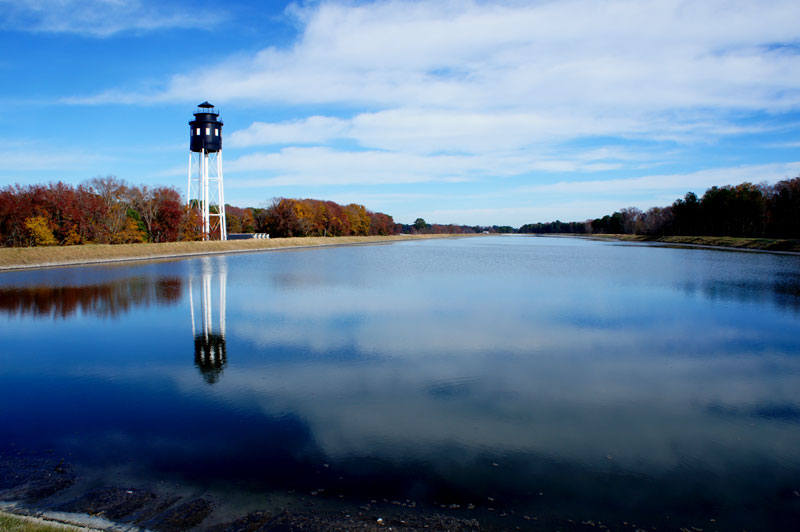
The municipal water system draws raw groundwater from local aquifers via sources like the East Well and Tower Well. This raw water is piped directly to the water treatment plant—the distinct lighthouse-shaped facility built right below or integrated with the base of the tower structure—where it undergoes filtration and chemical treatment (such as chlorination). Only after the water has been completely treated and disinfected is it pumped up into the elevated water tower storage tank to maintain municipal water pressure and buffer supply for the town.
The POTW plant has equipment to reduce the concentration of hardness ions that form a hard scale on plumbing fixtures and other applications that evaporate water. The plant blends 50% of the water with this treated water. This process DOES NOT REMOVE CHLORIDES.
I don’t think that American Water has announced a capital project to install Reverse Osmosis (RO) equipment at the POTW plant; this process would dramatically reduce the concentrations of chlorides in the finished potable water.
Issue #2: The Eastern Shore Groundwater Committee (Sept 22 2026) meeting included groundwater consultant Britt McMillan and other specialists discussed the region’s aquifer system. Duffy cited information indicating that while groundwater withdrawals may remain within estimated recharge limits, the depletion of stored groundwater could reduce underground pressure that helps prevent saltwater intrusion.
This article described Cape Charles, Virginia described the committee’s concerns is the Yorktown-Eastover aquifer, “a critical source of drinking water for communities throughout the Eastern Shore.”
The risk of declining quality of potable water in Northampton county – and especially in the bayside town of Cape Charles is not just critical – it’s A CALL TO ACTION – because the source of drinking water – the Columbia and Yorktown-Eastover multiaquifer system HAS BEEN DESIGNATED BY THE US EPA AS A SOLE SOURCE AQUIFER.
Here’s a recent article from the “Shore Daily News, DEQ Study Finds Growing Pressure on Eastern Virginia Groundwater:
https://shoredailynews.com/headlines/deq-study-finds-growing-pressure-on-eastern-virginia-groundwater/?fbclid=IwdGRzaATUaDhjbGNrBNRnnWV4dG4DYWVtAjExAHNydGMGYXBwX2lkDDM1MDY4NTUzMTcyOAABHvQIP_IHIDQJbMGptaOdoAENnkLgkwwP9K0pQ0ZBTu5kDblAQmzcBG8mIicn_aem_9595aU
No wonder that the town of Eastville passed a resolution objecting to the “Town Edge” initiative from the Northampton Board of Supervisors.
It’s time to shift the focus from regulatory actions that continue with the status quo to a comprehensive study about the continuing degradation of groundwater on the entire Eastern Shore. Cape Charles – a town on the bayside – is the first town to experience poorer drinking water as the aquifer recharge rate decreases and the population increases without any guardrails to preserve the quality of drinking water.
Finally American Water is a key stakeholder for Cape Charles – where are their voices in this discussion?
Look on the bright side.
The Developers and Bay Creek crew will make millions of dollars off of the rape of the environment and destruction of our sole fresh water source.
That’s what they, and their paid “partners” do…