
Townes Van Zandt wrote some of country music’s greatest songs. He never had a hit of his own.
Born March 7, 1944 – Died January 1, 1997, Fort Worth, Texas
When Willie Nelson and Merle Haggard took “Pancho and Lefty” to the top of the Billboard country charts in 1983, it was the crowning moment for a song that its creator would never have sought for himself. Townes Van Zandt—troubadour, drifter, and one of the most gifted songwriters in the American tradition—spent his life not chasing fame but fleeing it, trading the wealth he was born into for cheap motel rooms, backwoods cabins, and stages in half-empty dive bars.
From Privilege to Poetry
Van Zandt’s origins gave no hint of the wandering life ahead. Born in Fort Worth to a prominent Texas family—descendants of Republic of Texas leader Isaac Van Zandt, with an entire East Texas county bearing the family name—he was raised for a future in law or politics. His father, Harris, was a corporate lawyer whose career kept the family in constant motion: Fort Worth to Midland, then Billings, Montana, then Boulder, Colorado, and finally Houston.
Everything changed at Christmas 1956, when his father placed a guitar in his twelve-year-old hands. By his own account, watching Elvis Presley on The Ed Sullivan Show weeks earlier had already planted a seed. As he later told an interviewer, Elvis seemed to have “all the money in the world, all the Cadillacs and all the girls,” and all he did was play guitar and sing. It made an impression that no amount of grooming for the Senate could erase.
Van Zandt was a bright student—his parents had noted a high IQ score in grade school—and enrolled at the University of Colorado at Boulder in 1962. But binge drinking and spiraling depression brought his parents to Boulder within two years. What followed was a decision his mother would call her “biggest regret in life”: three months of insulin shock therapy at the University of Texas Medical Branch in Galveston. The treatment erased much of his long-term memory. It did not erase his desire to make music.
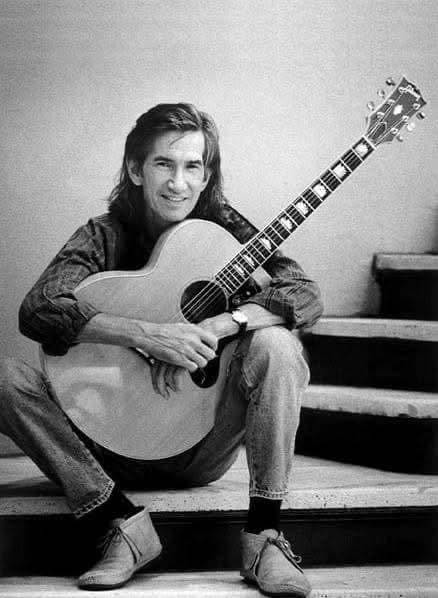
By 1965, Van Zandt was playing nightly at the Jester Lounge in Houston for ten dollars a night, crossing paths with Lightnin’ Hopkins, Guy Clark, and Jerry Jeff Walker. He built a repertoire of covers—Hopkins, Bob Dylan, Hank Williams—and original novelty songs, until his father urged him to start writing in earnest. A chance meeting with songwriter Mickey Newbury in a Houston coffee shop in 1968 changed his trajectory. Newbury brought Van Zandt to Nashville and introduced him to producer “Cowboy” Jack Clement, beginning the most prolific chapter of his career.
Between 1968 and 1973, Van Zandt released six studio albums in rapid succession: For the Sake of the Song, Our Mother the Mountain, Townes Van Zandt, Delta Momma Blues, High, Low and in Between, and The Late Great Townes Van Zandt. Within them lay the songs that would secure his legacy—“To Live Is to Fly,” “Pancho and Lefty,” and “If I Needed You”—works that elevated him to near-legend status in American and European songwriting circles, even as mainstream success remained elusive.
A 1973 concert captured on Live at the Old Quarter, Houston, Texas, released in 1977, remains one of the most celebrated live albums in the genre. Stripped to just Van Zandt and his guitar before a small audience, it revealed the raw power that studio production sometimes obscured.
Other artists turned Van Zandt’s compositions into hits he never had himself. Emmylou Harris and Don Williams scored a No. 3 country hit with “If I Needed You” in 1981. Two years later, Nelson and Haggard’s version of “Pancho and Lefty” reached No. 1—Van Zandt made a brief cameo in the music video, a ghost at his own party.
His cult following was fierce but small. When manager John Lomax III placed modest ads in the backs of music magazines, he was flooded with impassioned letters from around the world—fans who described Van Zandt’s music as a lifeline through their own depression. Yet the songwriter typically played to crowds of fewer than fifty. For much of the 1970s, he lived in a tin-roofed shack outside Nashville with no heat, plumbing, or telephone.
The Dylan Connection
Bob Dylan was reportedly a devoted fan who claimed to own all of Van Zandt’s records. Van Zandt admired Dylan’s songs but had no interest in his celebrity, and turned down repeated invitations to collaborate. The two first met by chance outside a costume shop in Austin’s South Congress neighborhood in June 1986. Dylan later arranged a second encounter, shutting down a stretch of the Drag in Austin; Van Zandt drove up in his motorhome, and Dylan climbed aboard to hear him play.
History Note: Steve Earle once stated, “Townes Van Zandt is the greatest songwriter in the world, and I will say that with my cowboy boots standing on Bob Dylan’s coffee table.” Townes said later, “I’ve met Bob’s security team, and I don’t think Steve could get anywhere close to his coffee table.”
Substance abuse and bipolar disorder shadowed Van Zandt throughout his life, altering his voice and health but never silencing his pen. He continued writing songs like “Marie” and “The Hole” in his final years, and a 1990 tour opening for The Cowboy Junkies introduced him to a younger generation. He died on New Year’s Day 1997 at age 52.
The 2000s brought a resurgence of interest: two biographies, a documentary titled Be Here to Love Me, and a wave of critical reappraisal. Today, Van Zandt is recognized as one of the most important songwriters in American music—a man who traded comfort for truth, and whose songs continue to serve as a quiet, enduring crutch for anyone who needs them.
About the Author



Stu Stu and I actually agree for once.
If you need to rent your vacation property to help pay the mortgage, then you could not afford it to…
"Building Department: Schedules and conducts physical inspections to ensure the property meets safety standards, occupancy limits, and applicable building codes."…
Renewable Energy? Sounds like a liberal wet dream. Drill Baby, Drill!
You are as crazy as a bed bug in June.