
Eleven people died on Everest in less than two weeks, the most during a climbing season on the peak since 2015.
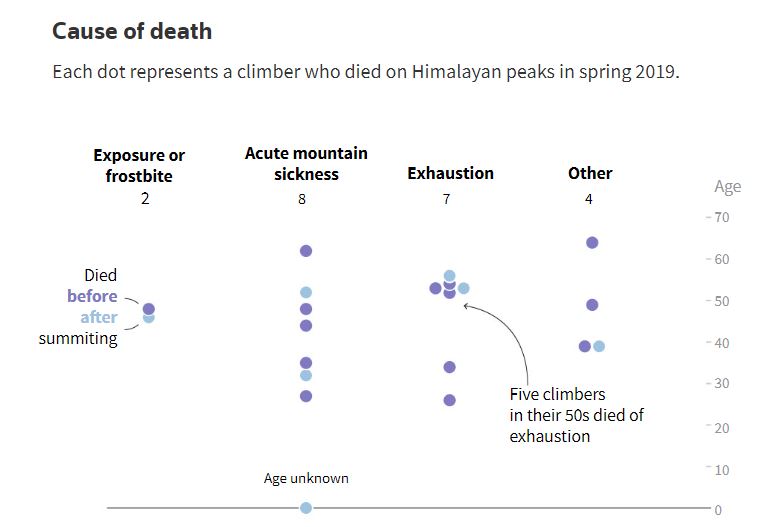
Most fatalities on Everest this year were due to acute mountain sickness (AMS), or exhaustion, one of the main effects of AMS. Breathing becomes difficult because the body isn’t able to take in as much oxygen. Other symptoms include nausea and vomiting, headaches, dizziness and shortness of breath.
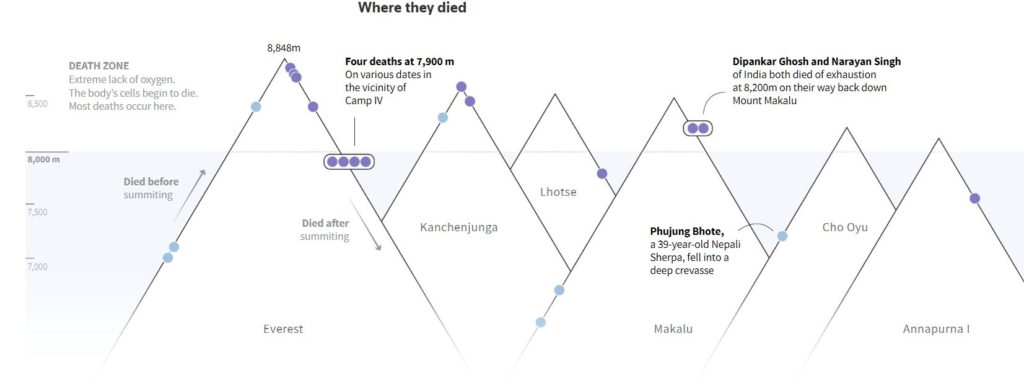
The majority of people succumbed in the “death zone” – a term used by mountaineers to refer to heights above 8000m, where oxygen levels are not enough to sustain human life for extended periods.
The ratio of deaths to summits for Everest is 1:33. This is far less deadly than Dhaulagiri IV, which has claimed more lives than there are people who have summitted it. The Himalayan Database, which has data on 10,000 expeditions and 76,000 climbers, notes that of the 98 people who have attempted Ngadi Chuli since 1961, only two summited while five people died. Even the popular Annapurna I has claimed the life of about one climber for every four who reach the top.
About the Author



It is none of your damn business how much water the concrete plant uses. You seem like a busy body.…
According to the Cape Charles Mirror (10/11/26), in the article on “Cape Charles Advances Municipal Building, Harbor Boardwalk and Infrastructure…
Thank you very much for your prompt edit 😊
You’ve posted a photo of Eyre Hall. This can be very misleading. Please correct. Editor's Note: Thanks for the catch!…
Issue #1: This statement lacks clarity about the treatment process for drinking water in Cape Charles, VA: The measurements presented…