
CAPE CHARLES, Va. — With thousands of tomato varieties available, choosing the right one for your garden can seem overwhelming. But local gardeners say the decision becomes easier when you focus on a few key factors—your climate, how you plan to use the tomatoes, the plant’s growth habit, and disease resistance.
For gardeners on Virginia’s Eastern Shore, tomatoes are a summer staple, thriving in the region’s warm days, coastal breezes, and long growing season.
Consider Your Growing Season
One of the first things to look for when choosing tomatoes is the variety’s “days to maturity.” This number, usually printed on seed packets or plant labels, estimates how long it takes for a plant to produce ripe fruit.
Gardeners with shorter seasons often prefer early varieties such as Early Girl or Celebrity, which can produce fruit in about two months. On the Eastern Shore, where summers can become quite hot and humid, heat-tolerant varieties such as Florida 91 often perform well during the peak of summer.
Choose Tomatoes Based on How You’ll Use Them
Tomatoes come in many shapes, sizes, and flavors—each suited to different uses in the kitchen.
- Cherry and grape tomatoes are small and sweet, making them ideal for snacking and salads. Popular choices include SunGold and Sweet Million.
- Paste or Roma tomatoes, such as Amish Paste, are excellent for sauces because they contain more flesh and fewer seeds.
- Beefsteak or slicer tomatoes like Big Beef, Beefmaster, or heirloom varieties such as Cherokee Purple are prized for sandwiches and fresh tomato salads.
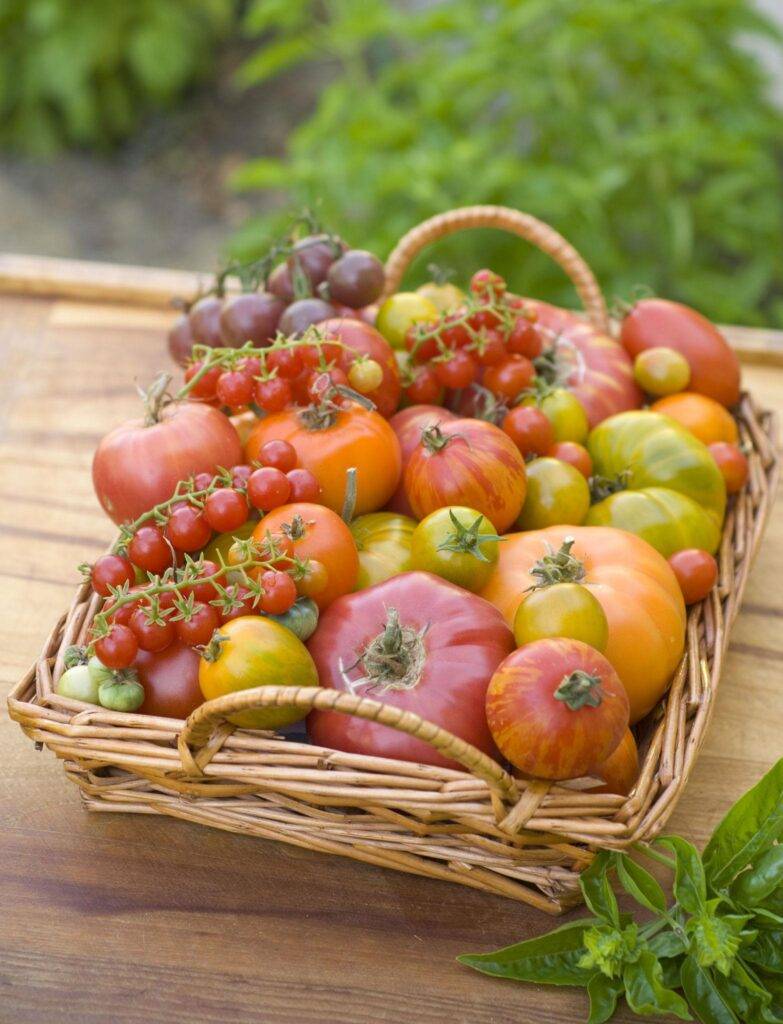
Tomatoes also come in a wide range of colors—from traditional red to yellow, green, purple, and even striped varieties.
Determinate or Indeterminate?
Another important factor is the plant’s growth habit.
Determinate (bush) tomatoes grow to a fixed height, usually about three to four feet, and produce most of their fruit over a short period. These are often preferred by gardeners who plan to make large batches of tomato sauce or who have limited space.
Indeterminate (vining) tomatoes continue growing and producing fruit throughout the summer, providing a steady harvest. These plants typically require tall stakes or cages for support.
Watch for Disease Resistance
Tomatoes are susceptible to several diseases, particularly during warm and humid weather. Seed packets often indicate resistance using letters such as F for fusarium wilt, V for verticillium wilt, and N for nematodes.
Late blight is one of the most feared tomato diseases because it can destroy plants quickly during warm, wet conditions. Choosing disease-resistant varieties and maintaining good garden hygiene can help protect plants.
Tips for Getting Started
Many beginners start with young tomato plants purchased from local garden centers. However, gardeners who enjoy starting plants from seed should begin six to eight weeks before the last frost, keeping seedlings warm and well-lit until it’s time to move them outdoors.
Before planting outside, tomato plants should be hardened off by gradually exposing them to outdoor conditions over about two weeks. Once the danger of frost has passed, they can be planted in the garden.
A Garden Full of Possibilities
For new gardeners, experts recommend planting two or three different varieties to see which grow best in your yard. With so many colors, shapes, and flavors available, discovering new tomatoes can become one of the most rewarding parts of summer gardening.
And on the Eastern Shore, there’s nothing quite like a freshly picked tomato—still warm from the sun—sliced and served with a pinch of salt.
About the Author


Stu Stu and I actually agree for once.
If you need to rent your vacation property to help pay the mortgage, then you could not afford it to…
"Building Department: Schedules and conducts physical inspections to ensure the property meets safety standards, occupancy limits, and applicable building codes."…
Renewable Energy? Sounds like a liberal wet dream. Drill Baby, Drill!
You are as crazy as a bed bug in June.