
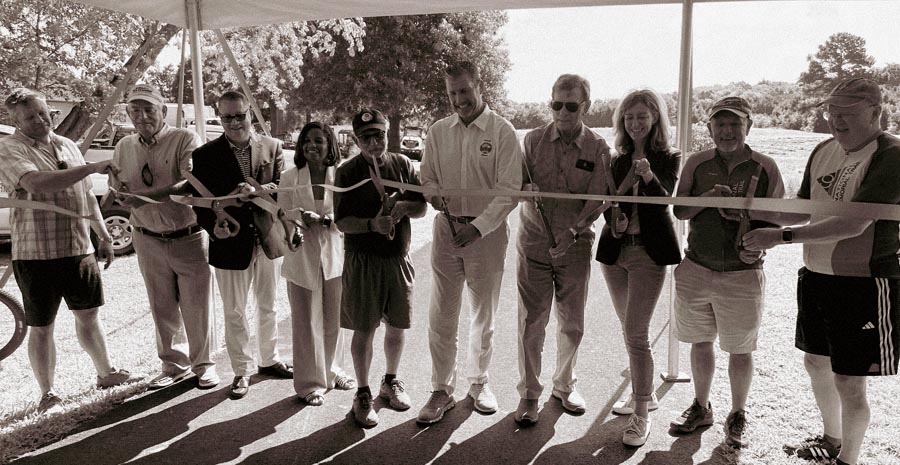
On August 20, a crowd gathered in Cape Charles, Virginia, for a ribbon-cutting. After years of planning, the first finished stretch of the Eastern Shore Rail Trail — a former railroad corridor being converted into a 49-mile shared-use path from Cape Charles to Hallwood — was officially open. There were speeches, an inaugural bike ride, and a fitting sense of celebration for a project years in the making.
But the ribbon only stretched so far. The section that opened runs from downtown Cape Charles out to Route 13 — short of Cheriton, the small town just a few miles up the corridor that the trail is ultimately supposed to reach. VDOT officials said the adjoining Cheriton segment couldn’t open that day because it still needs final signage and pavement markings, work now expected to wrap up sometime this fall.
To be fair, this isn’t a case of a project abandoned or forgotten. There is a timeline, VDOT has been transparent about the remaining punch-list items, and by all accounts the delay is measured in weeks or months, not years. The Mirror owes readers that context. But context isn’t the same as insignificance, and the order in which this trail has come together is worth sitting with.
Two towns, two very different starting points
Cape Charles and Cheriton sit less than five miles apart on Virginia’s Eastern Shore, but they are, in most of the ways that matter economically, different worlds. Cape Charles has spent the last two decades transforming from a sleepy former railroad town into a magnet for retirees, remote workers, and second-home buyers drawn by its waterfront, its golf resort, and its walkable historic district. Median home values there have climbed past $600,000, and the town’s per-capita income is well above the state average. It is, by regional standards, an affluent and rapidly gentrifying place.
Cheriton tells a different story. Census data puts its median household income at roughly $37,000 — about two-thirds of the county average and less than half the statewide figure. Close to a quarter of its residents live below the poverty line, nearly double the state rate. It’s a majority-working-class, racially mixed community that has watched its population shrink for years, even as its more prosperous neighbor has grown and its property values have surged.
Neither town chose these circumstances in isolation. Cape Charles’s transformation reflects a broader pattern across the country: people with money and remote-work flexibility have been moving out of cities and pricier suburbs into smaller, scenic towns, driving up housing costs and reshaping local economies (and the community) in the process. Cheriton, meanwhile, has largely been left to absorb the surrounding region’s slower job growth and higher poverty without the same wave of investment.
Infrastructure follows money — even when the money didn’t ask for it
None of this proves anyone acted in bad faith. The trail was always going to be built in phases, and building outward from Cape Charles, where the foundation, fundraising base, and organizational energy for the project originated, is a defensible engineering and logistical choice. It’s also true that the Cheriton segment isn’t sitting untouched — it’s largely built, with the same contractor finishing largely cosmetic work.
But defensible doesn’t mean neutral. When public infrastructure — recreational trails, sidewalks, broadband, parks — repeatedly reaches the wealthier, faster-growing town first and the poorer, slower-growing one second, the pattern takes on meaning. It tracks a familiar pattern in rural America: the places already gaining population and tax base get the ribbon-cuttings, while the places that could most use an economic jolt — walkable access to jobs, tourism dollars, safer routes for people without cars — wait a little longer, again.
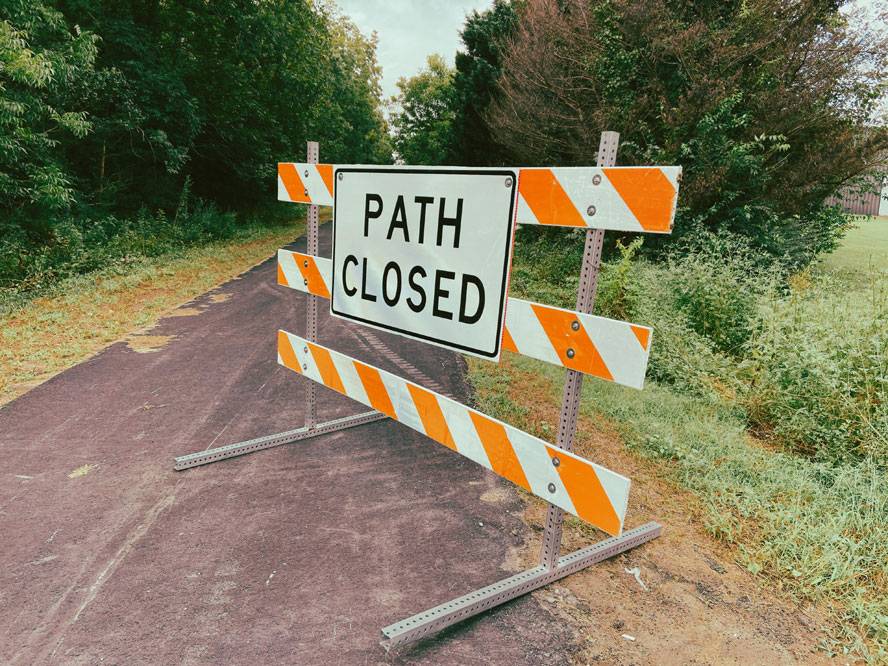
That gap matters more in a town like Cheriton than it does in Cape Charles. A four-mile recreational trail is a pleasant amenity in a town full of golf courses and boutique businesses. In a town where nearly a quarter of residents live in poverty and public transit is limited, the same trail could be a genuine transportation asset — a free, safe way to reach the Route 13 shopping corridor without a car. The wait costs the two towns very differently.
A pattern bigger than one trail
This is where the rail trail becomes a small but telling case study in a much larger story: rural communities absorbing the second-order effects of urban and suburban wealth migration. As people flush with big-city money buy into small towns for their affordability and charm, they often inflate housing costs and change local politics and priorities — while the working-class communities next door, without the same tax base or lobbying power, watch investment flow toward the places already gaining. It’s not a conspiracy. It’s what happens when money moves faster than policy does.
None of this means Cape Charles residents don’t deserve their trail, or that VDOT is neglecting Cheriton on purpose. The agency’s own materials show a phased, funded plan that includes Cheriton and the towns beyond it. Reasonable people can also argue that finishing one segment fully before opening another is simply good, safety-conscious project management, not a statement about whose town matters more.
But intentions aren’t the only thing that determines outcomes. If the Eastern Shore wants its rail trail to be a genuine unifying asset — and not just a very nice amenity for the town that already has the most — it will need to make sure Cheriton’s opening gets the same fanfare, follow-through, and urgency that Cape Charles’s did. The corridor runs through both towns. So should the investment.
About the Author



But all the daddy's got rich selling to the come heres. Dont the come heres have rights after stuffing money…
Concrete is 20% water and I am quite sure that the concrete plant was in operation before the 'Come'Heres' got…
Wayne gets his info from truth social. He cosplays an American, Editor's Note: Hey cissy, your grammar sucks (sentences end…
Hi, Joseph, and let me say you sound nice, if a bit confused. Aren't you aware of the fact that…
Please explain how it is anyone else's business other than the company that uses the water. There are adults talking…