
Why Cape Charles Is a Natural Fit.
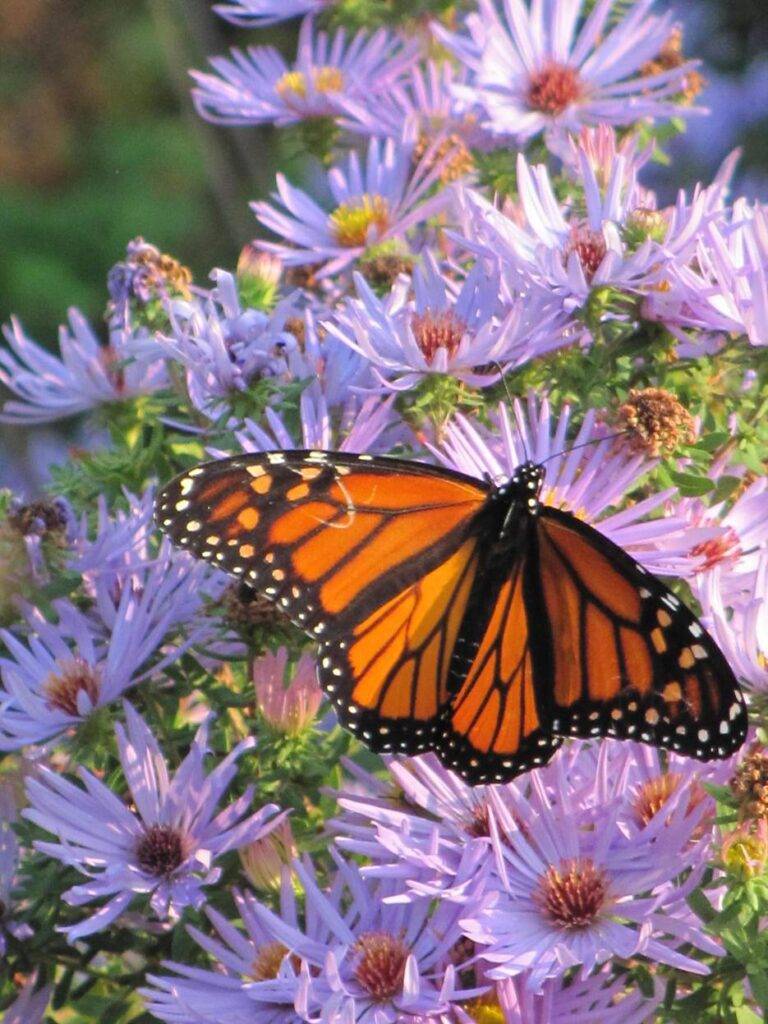
The Town of Cape Charles sits at one of the most remarkable ecological crossroads on the East Coast. The narrow Delmarva Peninsula acts as a natural funnel for millions of migratory species each fall — including monarch butterflies, which pass through on their way south. Nearby Kiptopeke State Park, operated in partnership with the Coastal Virginia Wildlife Observatory, has run one of the East’s premier monarch tagging and observation programs for more than two decades, drawing scientists and nature lovers alike. This geography isn’t just scenic — it means Cape Charles is already embedded in one of North America’s most critical pollinator corridors. The town also sits within a region with a deep tradition of native plant stewardship: Eastern Shore Master Gardeners maintain dedicated pollinator gardens in Northampton County, local nurseries stock salt-tolerant native species like seaside goldenrod and Virginia saltbush, and community conservation values run strong. Becoming a Bee City USA affiliate would give Cape Charles a formal framework to build on what’s already happening — channeling that community energy into lasting habitat, reduced pesticide use, and a public commitment that honors the extraordinary natural landscape of the Shore.
Across the United States, something quietly extraordinary is happening in backyards, city parks, and highway medians. Native wildflowers are replacing manicured turf. Pesticide signs are coming down. And the hum of bees — bumble bees, mason bees, sweat bees, and dozens of others — is growing a little louder.
This is the work of Bee City USA, a program of the Xerces Society for Invertebrate Conservation that gives municipalities a practical, community-driven framework for protecting native pollinators. Since its founding, the initiative has grown into a nationwide network of cities, towns, and counties formally committed to making their communities safer and more hospitable for the insects that quietly sustain our food supply and ecosystems.
Bee City USA is built around a simple but powerful premise: local governments are uniquely positioned to drive conservation at scale. When a city officially becomes a Bee City USA affiliate, it makes a formal, public commitment to take concrete action for pollinators — not just a symbolic gesture, but a measurable pledge backed by ongoing accountability.
Affiliates agree to:
- Increase native plant habitat on public lands, rights-of-way, and in partnership with private landowners
- Reduce pesticide use by adopting Integrated Pest Management (IPM) practices and eliminating or limiting the use of neonicotinoids and other pesticides harmful to pollinators
- Educate and engage the community through pollinator-themed events, gardens, signage, and school programs
- Establish a Pollinator Protection Committee to guide and sustain the work over time
- Report annually on progress, keeping the commitment meaningful year after year
Affiliate status isn’t permanent — it must be renewed, which ensures communities stay active rather than resting on a ceremonial designation.
Why Pollinators Need Our Help
The stakes behind Bee City USA are high. Pollinators — including bees, butterflies, moths, beetles, and hummingbirds — are responsible for facilitating the reproduction of roughly 75% of flowering plant species worldwide and contributing to the production of about one-third of the food humans eat. Yet their populations have been in serious decline for decades.
North America has lost more than a quarter of its managed honeybee colonies in recent years, and wild native bee populations have suffered even more dramatic losses. Monarch butterfly populations have plummeted by more than 80% over the past two decades. The culprits are well-documented: habitat loss, pesticide exposure, disease, parasites, and the effects of climate change.
Urban and suburban environments — long written off as ecological dead zones — are now recognized as critical refuges. Cities cover a significant portion of the American landscape, and the choices made within them, from what’s planted in a median strip to what’s sprayed on a municipal park, have real consequences for pollinator survival.
The Xerces Society: Science Behind the Movement
Bee City USA draws its credibility and guidance from the Xerces Society, a nonprofit conservation organization that has championed the protection of invertebrates and their habitats since 1971. Named for the now-extinct Xerces blue butterfly — the first butterfly in the United States documented to go extinct due to human activity — the Society brings rigorous science to its work.
The Xerces Society provides Bee City USA affiliates with technical resources, native plant lists tailored to specific regions, pesticide reduction guidance, and best practices for pollinator habitat creation. It also runs parallel programs, including Bee Campus USA for colleges and universities and broader advocacy campaigns, making it one of the most comprehensive pollinator conservation organizations in the country.
What Affiliation Looks Like in Practice
Every Bee City USA affiliate looks a little different, because the solutions are shaped by local conditions, local species, and local people. But the results share a common spirit.
In some cities, affiliation has meant converting traffic roundabouts and road medians to native wildflower plantings — low-maintenance and beautiful, while providing critical forage for bees and butterflies. In others, it’s meant revising municipal pesticide policies to restrict the use of insecticides during bloom times when foraging insects are most vulnerable.
Community pollinator gardens have sprung up in schoolyards and parks. Local nurseries have partnered with city programs to offer native plants at subsidized prices. Annual “Pollinator Week” events have drawn thousands of residents into conversations — and gardens — they may never have encountered otherwise.
The program also creates a feedback loop: communities that achieve affiliation often inspire neighboring towns to apply, spreading the network organically.
How to Get Involved
You don’t have to be a city official to make a difference. Bee City USA depends on engaged residents to carry the message to local government and to do much of the hands-on habitat work themselves.
If you’re a resident, you can:
- Plant native flowers, shrubs, and trees in your yard or community spaces
- Reduce or eliminate pesticide use at home
- Advocate to your city council or parks department for Bee City USA affiliation
- Volunteer with your local affiliate’s Pollinator Protection Committee
If you represent a municipality, the Bee City USA website provides a clear application process, resources for getting started, and a growing community of affiliate cities to learn from.
If you’re an educator, the program offers curriculum connections and the opportunity to turn your school grounds into a certified pollinator habitat — a living classroom that teaches ecology, stewardship, and science all at once.
There is something quietly radical about a city deciding that the bees matter. It reframes municipal land management, changes purchasing decisions, and sends a signal to residents that the natural world — even the tiny, often-overlooked parts of it — is worth protecting.
Bee City USA doesn’t ask communities to solve the pollinator crisis overnight. It asks them to start, to keep going, and to bring their neighbors along. That incremental, community-rooted approach is precisely what makes it so effective.
The bees were here long before us. With the right commitment, they can be here long after, too.
Learn more or find your nearest affiliate at beecityusa.org. To explore the science behind pollinator conservation, visit the Xerces Society.
About the Author



Of course it's his business how much water the concrete plant uses. This is still America, afterall. And where are…
It is none of your damn business how much water the concrete plant uses. You seem like a busy body.…
According to the Cape Charles Mirror (10/11/26), in the article on “Cape Charles Advances Municipal Building, Harbor Boardwalk and Infrastructure…
Thank you very much for your prompt edit 😊
You’ve posted a photo of Eyre Hall. This can be very misleading. Please correct. Editor's Note: Thanks for the catch!…