


A harsh winter, tightening markets, and mounting ecological pressures have converged to deliver what many watermen are calling one of the most difficult oyster seasons in recent memory — a downturn now drawing federal attention.
Maryland U.S. Rep. Andy Harris is urging the National Oceanic and Atmospheric Administration (NOAA) to declare an economic fishery disaster for the state’s oyster industry, a move that could unlock federal relief funds for struggling oystermen across the Chesapeake region.
In a letter sent to NOAA, Harris described the 2025–2026 harvesting season as “devastating,” citing severe weather, shrinking market access, and intensifying competition that have left many boats idle for most of the season.
“Iced-over waterways and extreme cold effectively tied crews to the dock,” Harris said, noting that some watermen were able to work “just one or two days all season.” He warned that the convergence of environmental and economic pressures now threatens both individual livelihoods and a cornerstone of the Eastern Shore’s maritime economy.
Harris’ request asks NOAA to issue an economic fishery disaster determination under Section 312(a) of the Magnuson-Stevens Fishery Conservation and Management Act. Such a declaration would make federal disaster relief funding available to offset losses, support infrastructure, and stabilize the workforce tied to the oyster trade.
If approved, assistance can include direct financial relief, low-interest loans, research funding, and workforce support programs designed to help fisheries recover from catastrophic seasons.
The request follows similar fishery disaster declarations in other U.S. regions in recent years, often tied to hurricanes, harmful algal blooms, or stock collapses.
Concerns are not limited to Maryland waters.
On Virginia’s Eastern Shore, the Accomack-Northampton Planning District Commission has drafted a letter asking the Virginia Marine Resources Commission (VMRC) to assess whether Virginia’s oyster sector may also qualify for disaster relief.
Regional officials say the same weather patterns and market forces affecting Maryland have rippled throughout the Chesapeake Bay system, where oyster harvests, aquaculture operations, and seafood processors are economically intertwined.
Water temperatures plunged well below seasonal norms this winter, icing over shallow creeks and seaside bays where oyster cages are typically worked daily.
For Cape Charles and lower Shore growers, that meant:
- Limited access to floating cage systems
- Delayed grading and tumbling cycles
- Increased oyster mortality risk in frozen gear
- Missed wholesale shipping windows
Several aquaculture operators reported being unable to work leases for weeks at a time — an operational standstill during what is normally a peak market supply period tied to winter raw bar demand.
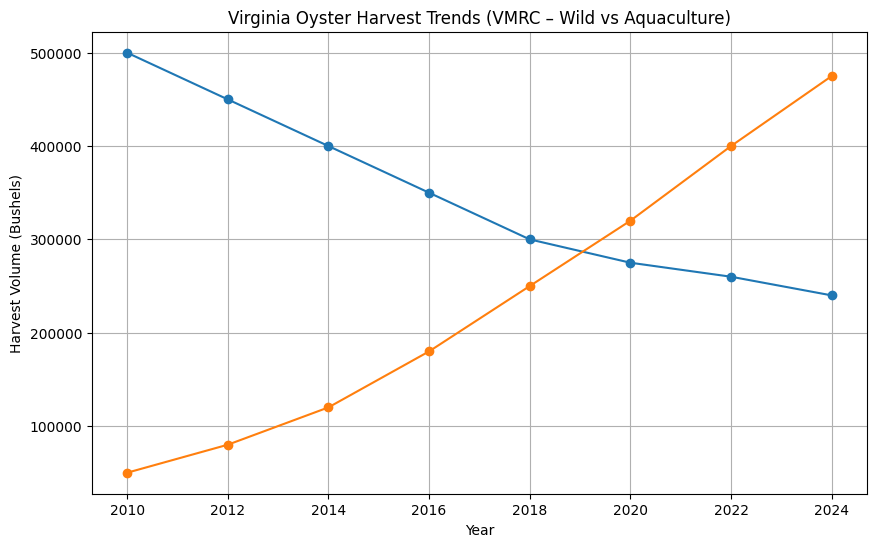
Virginia Aquaculture: Growth Meets Headwinds
Unlike Maryland’s wild harvest-heavy industry, Virginia’s oyster economy has been driven by explosive aquaculture growth.
According to the Virginia Marine Resources Commission:
- Farm-raised oysters now account for 70%+ of Virginia production
- Virginia is the No. 1 East Coast producer of cultured oysters
- The sector generates tens of millions annually in dockside value
Leases stretch from the Lynnhaven and York rivers down through the Eastern Shore lagoon system — including intensive operations near Cape Charles Harbor and Plantation Creek.
Yet that growth has come with vulnerability.
Aquaculture depends on:
- Consistent water access
- Reliable labor
- Restaurant market demand
- Stable shipping logistics
All four faltered this season.
EASTERN SHORE OYSTER SNAPSHOT
Virginia Oyster Industry
- #1 East Coast aquaculture producer
- Majority farm-raised production
- Tens of millions in annual value
- Hundreds of regional jobs
2025–26 Season Impacts
- Ice-locked waterways
- Lost harvest days
- Market contraction
- Rising fuel/labor costs
Relief Pathway
- Federal disaster declaration
- Magnuson-Stevens Act Section 312(a)
- Funding + economic recovery aid
Market Contraction Compounds Losses
Even when growers could harvest, selling the product proved difficult.
Regional seafood buyers report:
- Softer raw bar demand amid inflation
- Restaurant belt-tightening on premium oysters
- Competition from Gulf Coast farmed products
- Canadian imports are pressuring wholesale pricing
Fuel and labor costs — both sharply elevated since 2021 — have further squeezed margins for small leaseholders.
Wild Harvest Still Struggling
While aquaculture dominates Virginia’s output, the traditional public-ground fishery remains culturally and economically significant.
But wild stocks continue to face long-term decline pressures:
- Disease (MSX, Dermo)
- Habitat loss
- Historic overharvesting
- Water quality stressors
Today, Chesapeake Bay oyster abundance remains under 1% of pre-industrial levels, despite decades of sanctuary reef restoration and shell replenishment programs.
About the Author


Looks like the Virginia watermen are an afterthought unlike Maryland watermen. Maryland understands that those people don’t have the means to weather this economic storm. Yet here we’re more concerned with the large aquaculture operations . Guess what? They have the ability to insure their crops and have the means to cover what the insurance doesn’t. Just look at the operations and the ownerd we all know. Most have spent the winter at their Costa Rican getaways. They’ll be fine they don’t need a government check .
Accomack and Northampton County should put more time in securing help for the individuals who have been out of work this past winter. They are a large part of the community as well and deserve the same respect that Maryland gives their working watermen.