
ACCOMACK/NORTHAMPTON COUNTIES, Va. — As spring planting season draws near, farmers on Virginia’s Eastern Shore are confronting a troubling reality: the cost of putting a crop in the ground keeps climbing, while the prices they receive for what they harvest have not kept pace.
From the potato fields of Northampton County to the grain operations of Accomack, growers are grappling with fertilizer bills running 10 to 15 percent higher than last year and fuel costs that remain a persistent drag on tight operating budgets.
The Eastern Shore’s rural landscape has long been devoted to cotton, soybeans, vegetable and truck farming, and large-scale chicken farms (Wikipedia). Large farm operations in Northampton County produce grains such as wheat, corn and sorghum, while potatoes, cotton, and tomatoes round out large-scale farm production — all on land where roughly 75 percent of the county is classified as prime farmland by the USDA.
The region plays an outsized role in supplying the Northeast with fresh produce each summer. When the calendar hits mid-June, all eyes in the produce industry turn to the Eastern Shore, as farmers ready crops like cabbage, green beans, potatoes, and sweet corn — filling the critical time slot between North Florida’s end and when Pennsylvania, Wisconsin, and Massachusetts farms start harvesting in late July.
That agricultural identity is now under financial pressure.
Prices for several key fertilizers are climbing higher, with phosphate fertilizers leading the increase, nitrogen products showing month-to-month swings, and potash rising due to trade policy risks. The share of fertilizer within total farm production costs remains elevated, and farmers are entering another year in which volatile markets and tight — or negative — margins reduce their ability to accommodate rising costs.
Fertilizer prices for 2026 are projected to range 10 to 15 percent higher than in 2025, driven by world demand, production constraints, and tariffs. U.S. government data suggests fertilizer can comprise up to 40 percent of some crop production costs, highlighting the severe budget pressure that increasing input costs can create.
A conflict in the Middle East has made things worse. The war in Iran has effectively blocked the Strait of Hormuz — a major chokepoint through which one-fifth of the world’s oil and one-third of the world’s fertilizer pass — shocking global fertilizer supply just as American farmers prepare for the spring planting season. Even before the conflict erupted, the cost of nitrogenous fertilizer had already shot up by 22 percent from February 2025 to February 2026, according to the Bureau of Labor Statistics.
Fuel costs compound the problem. Eastern Shore farmers operate equipment that burns through diesel at a significant rate. As Cambridge Farms owner Ken Gad put it bluntly: “When you run that John Deere at 12 gallons an hour, costing $5 to $6 a gallon, you’re talking a lot of fuel.”
The cost increases arrive at a particularly difficult moment. New USDA data show that by October 2025, the prices paid index had climbed to 154.6, while the prices received index had fallen to 120.5 — a gap of 34.1 index points, the widest spread in data going back at least a decade. In practical terms, production costs were more than 50 percent higher than 2011 levels, while prices farmers received were only about 21 percent higher.
Prices for staples like corn and soybeans have remained flat, but costs for fertilizer and other inputs have outpaced inflation, squeezing farm incomes across Virginia. Virginia’s agriculture and forestry sectors contribute more than $82 billion to the state economy annually, making the financial health of its farms a statewide concern.
The mix of shrinking revenues and growing expenses means many farmers have had to take on debt to stay afloat — a trend that pushed farm debt to a record high in 2025.
Eastern Shore farmers are no strangers to adversity — the region has weathered economic disruptions for generations. But industry observers say the current environment demands careful management.
Beyond fertilizer and fuel, growers are also contending with inflated costs for crop protection products, supply chain and trucking issues, and increasing costs of seasonal agricultural labor.
According to Josh Linville, Vice President of Fertilizer with StoneX, “It’s been a tough year in 2025, and 2026 doesn’t look a lot better,” pointing in particular to global phosphate supply remaining very tight.
Some relief may be on the horizon. Lower diesel fuel costs may offset some of the higher fertilizer input costs, and experts suggest that farmers will need to adapt and adopt strategies to manage budgets carefully. A new six-year Farm Bill signed in 2025 also includes higher crop support prices, which could provide a financial cushion for some producers.
For now, Eastern Shore growers face a spring planting season where every input decision carries greater weight — and where the margin between a profitable harvest and a losing year has rarely felt so thin.
This article draws on data from USDA, the American Farm Bureau Federation, and industry analysts. Local farmers and agricultural officials are encouraged to contact the Virginia Department of Agriculture and Consumer Services or the Virginia Cooperative Extension for guidance on input cost management strategies.
About the Author



Of course it's his business how much water the concrete plant uses. This is still America, afterall. And where are…
It is none of your damn business how much water the concrete plant uses. You seem like a busy body.…
According to the Cape Charles Mirror (10/11/26), in the article on “Cape Charles Advances Municipal Building, Harbor Boardwalk and Infrastructure…
Thank you very much for your prompt edit 😊
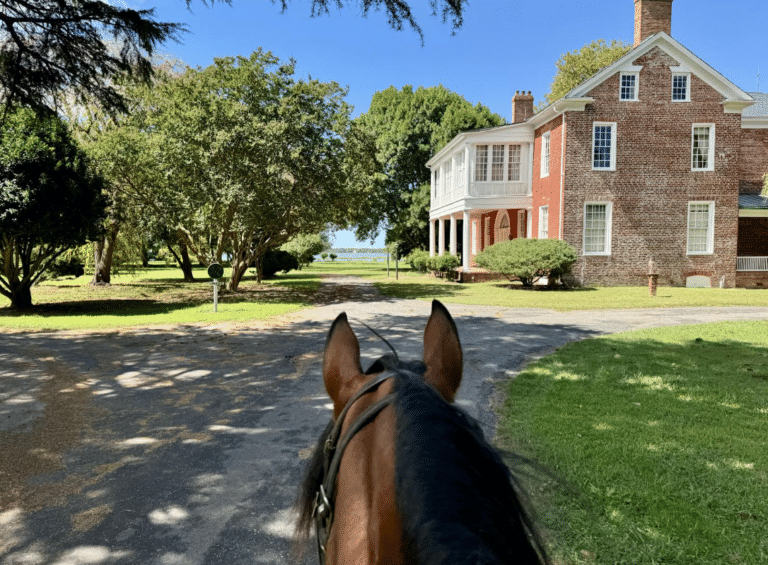
You’ve posted a photo of Eyre Hall. This can be very misleading. Please correct. Editor's Note: Thanks for the catch!…