
Several readers have contacted the Mirror regarding Mayor Adam Charney’s marketing strategy, highlighting the intersection of public service and private enterprise, but questions about appearances should not be confused with evidence of wrongdoing.
CAPE CHARLES, Va. — In the highly competitive mortgage industry, standing out is essential. For Cape Charles Mayor Adam Charney, that means embracing a distinctive professional identity: “Virginia’s Mortgage Mayor — Home Loans Made Simple.”
Charney, a mortgage broker with more than 30 years of experience, promotes his services to prospective homebuyers across Virginia’s Eastern Shore and Hampton Roads, emphasizing straightforward answers, competitive financing options and a smooth path to closing.
His branding makes use of a fact that was publicly known when he sought office: Charney was a mortgage professional before becoming mayor.
The question is whether using his elected title to distinguish himself in a competitive market represents an ethical concern or simply effective marketing.
There is an important difference between the two.
A Public Title and a Private Business
Cape Charles is a small town where elected officials often maintain private careers alongside their public responsibilities. The mayor’s position is not a full-time salaried occupation. It carries a relatively modest stipend established through the town’s governing process.
Charney’s “Mortgage Mayor” branding combines his established profession with his public identity. In a market where name recognition, local relationships and professional credibility influence consumer decisions, a memorable title can provide a competitive advantage.
Using an elected title in commercial advertising can raise legitimate questions about whether public office is being used to advance private interests.
But identifying oneself as an elected official while advertising a private business does not, by itself, establish corruption, a conflict-of-interest violation, or misuse of public office.
The relevant questions are whether Charney has used town resources to promote his business, leveraged municipal authority to obtain customers, participated in decisions affecting his personal financial interests, or otherwise received an improper benefit.
Without evidence of such conduct, allegations of wrongdoing would be unsupported.
The Municipal Building Financing Question
One area deserving public scrutiny involves Cape Charles’ financing arrangements for its new municipal building, which is already under construction.
The town authorized up to $7.3 million in General Obligation Bonds, Series 2026, under Ordinance 20260916.
The proceeds may support the design, construction and equipping of the new facility, other authorized capital projects and associated debt issuance costs.
The existing municipal building at 2 Plum St., constructed in 1930, has been considered inadequate for staff and residents conducting government business. The replacement is intended to serve the town’s needs for decades.
The ordinance establishes a maximum interest rate of 4.84%, with final maturity no later than Dec. 31, 2046.
Town officials worked with Davenport & Company LLC to evaluate financing options. Davenport recommended general obligation financing to preserve existing fund balances for other capital needs.
The town considered participation in a Virginia Resources Authority pooled bond sale or a direct bank loan. The ordinance references a Sept. 3 proposal from Webster Public Finance Corporation while allowing officials to select another lender within council-approved parameters.
Given Charney’s background in mortgage lending, questions about the town’s financial arrangements are understandable.
However, municipal bond financing and residential mortgage brokerage are different financial activities.
The town’s relationship with Davenport does not establish an improper connection to Charney’s private mortgage business.
Relevant questions would include whether Charney had any personal financial relationship with Davenport, Webster or another participant; whether he received compensation or referral benefits; and whether he participated in decisions involving a legally disqualifying financial interest.
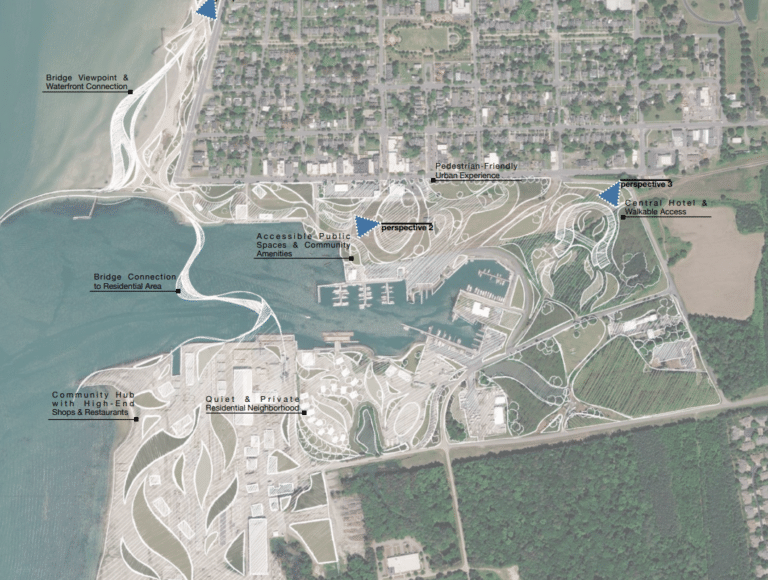
The information presented does not establish any such arrangement, benefit, or improper influence. However, as the town edges closer to developing the harbor district, more transparency will be required.
Public officials should be held accountable for decisions involving taxpayer money. Virginia’s State and Local Government Conflict of Interests Act establishes requirements concerning personal interests, financial disclosures, and participation in certain government transactions.
If questions arise about the municipal building financing, the appropriate response is to examine financial disclosures, advisory agreements, council minutes, procurement documents, and relevant business relationships.
These records could establish whether an actual conflict existed—or demonstrate that no improper relationship was involved.
Residents are entitled to question a mayor’s business practices, criticize the use of an elected title in advertising and demand transparency.
But criticism and defamation are different matters.
False factual accusations of corruption, self-dealing or financial misconduct can create reputational and potentially legal consequences. Under Virginia law, slander generally concerns spoken defamatory statements, while written defamatory statements may constitute libel.
Public officials face a demanding legal standard when pursuing defamation claims involving official conduct, including generally having to establish actual malice. Legitimate criticism and opinion receive substantial First Amendment protection.
Social Media Allegations and the Limits of Fair Criticism
The discussion also raises broader questions about the responsibilities of residents who use social media to scrutinize elected officials. Noted are criticisms that Mayor Charney, due to his profession, is using his office to promote higher-density zoning and more construction.
Facebook posts, online comments and other written digital communications are not exempt from Virginia’s defamation laws. While citizens enjoy broad constitutional protections when criticizing public officials, those protections do not necessarily extend to knowingly or recklessly false factual allegations of corruption, financial misconduct or abuse of office.
Virginia law recognizes that certain false statements damaging an individual’s professional reputation may constitute defamation per se.
That distinction is particularly relevant when discussing an elected official who also operates a private business.
Residents have every right to question Mayor Adam Charney’s use of the “Mortgage Mayor” title, examine the town’s financial relationships and demand transparency concerning the municipal building project.
However, there is a meaningful difference between asking whether a conflict of interest exists and asserting, without substantiation, that an elected official has personally profited from municipal financial arrangements.
Repeating an unverified allegation on social media does not automatically shield the person publishing it from potential liability. Nor does describing an accusation as a rumor necessarily eliminate the legal risks.
At the same time, public officials face a particularly high burden in defamation cases. They generally must demonstrate that false factual allegations concerning their official conduct were published with knowledge of their falsity or reckless disregard for the truth.
The First Amendment protects vigorous public debate, including criticism that elected officials may consider unfair, harsh or politically motivated.
It does not, however, provide unlimited protection for deliberately or recklessly false statements of fact.
For Cape Charles, the appropriate standard should be straightforward: question public decisions, examine financial records, demand accountability, and follow the evidence.
Public scrutiny is essential to good government. Unsupported accusations are no substitute for it.
Judge Conduct, Not Occupation
Charney’s professional background was publicly known when he ran for mayor. Voters elected a local businessman who would continue earning his living while serving in municipal government.
Some residents may consider the “Mortgage Mayor” slogan clever branding. Others may find the blending of an elected title and commercial advertising uncomfortable.
Both reactions are legitimate opinions.
What matters is whether his official actions have improperly benefited his private business.
The same standard should apply to any elected official working in real estate, signage, construction, banking, law, hospitality, or another industry intersecting with municipal government.
Public service does not require abandoning a private profession. It does require maintaining appropriate boundaries between public responsibilities and private financial interests.
Cape Charles’ municipal building financing deserves oversight because it involves millions of dollars in public borrowing. The town’s dealings with advisers and lenders should be transparent, and any actual conflicts should be disclosed and addressed under applicable law.
But oversight should not become accusation by association.
Until evidence demonstrates that Charney used his office to direct business to himself, obtain an improper financial benefit, or influence town financing for personal gain, his “Mortgage Mayor” branding remains a marketing strategy built around his profession and elected office.
A memorable slogan is not proof of misconduct. Public accountability demands evidence, not innuendo.
About the Author



I'm from north of you, and believe me, that is nothing new, nor nothing local! It is well known among…
I heard he's back in business, but cant find him. Did you ever report him to DPOR? Did you ever…
You, sir, are taking the long view! And may we always live in interesting times!
Oh well. Things could always be worse. For instance: Trump has brought down the entire Republican Party. Will take them…
As there are a few things, I could disagree with that Mr. Spuck quoted I need to clear up one…