
CAPE CHARLES, Va. — Cherrystone Aqua-Farms has earned Best Aquaculture Practices certification from the Global Seafood Alliance, making the Eastern Shore company the first shellfish farm on the East Coast and the first hard clam farm in the United States to complete the certification process.
The certification covers Cherrystone’s farms across Virginia’s Eastern Shore, where the fifth-generation, family-led company raises hard clams and Eastern oysters. Cherrystone describes itself as the nation’s largest producer of hard-shell clams and a major producer of farm-raised Eastern oysters. The company operates on more than 9,000 acres on the Eastern Shore.
The Global Seafood Alliance is an international nonprofit organization that promotes responsible seafood production through education, advocacy and third-party certification. Its Best Aquaculture Practices program evaluates aquaculture operations against standards covering environmental responsibility, social accountability, food safety, and animal health and welfare.
For shellfish growers, those standards put particular emphasis on practices that protect both the product and the waters in which it is grown.
What best practices mean for clam farming
Hard clams are filter-feeding mollusks, meaning they obtain food naturally from microscopic organisms in surrounding seawater rather than relying on manufactured feed. Because the animals are directly connected to their surrounding environment, responsible clam aquaculture depends heavily on water quality, careful site management, sanitation, traceability and protection of surrounding marine habitat.
The BAP program maintains a separate Mollusk Farm Standard for unfed species such as clams, oysters and mussels.
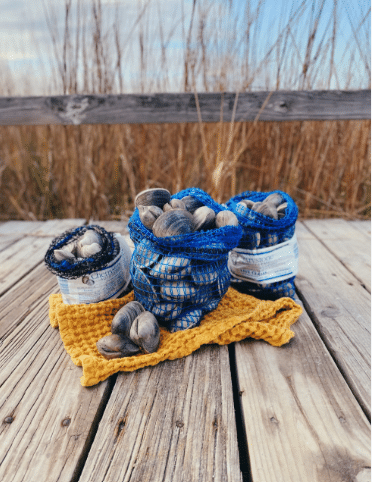
Among the broader practices evaluated under BAP are water-quality management, protection of marine habitat, proper waste management, food safety, employee health and safety, animal health and traceability. Certification is based on independent third-party audits rather than a producer’s own assessment. Facilities must address nonconformities found during an audit before certification can be awarded.
For a clam operation, good aquaculture practices begin well before harvest. Seed clams must be produced and handled under controlled conditions, transferred to appropriate growing areas and monitored as they develop. Growers must manage stocking and husbandry practices while protecting water quality and minimizing impacts on surrounding habitat.
Food safety is particularly important with shellfish because clams filter large quantities of water as they feed. Maintaining approved growing waters, sanitary harvesting and handling procedures, temperature control after harvest, and the ability to trace shellfish through the supply chain are critical parts of producing a safe product.
Traceability also allows a harvested lot to be connected with its production history and movement through processing and distribution. BAP standards extend beyond the farm itself, with certification programs covering hatcheries and processing plants as well as farms. GSA describes BAP as the only seafood-specific certification program capable of covering every stage of the aquaculture production chain.
Eastern Shore roots
Cherrystone’s aquaculture operations grew out of a commercial fishing business with roots stretching to 1895.
The company’s transition toward aquaculture accelerated in 1983, when the Ballard family shifted from its traditional wild-shellfish business toward raising clams and, later, oysters. The change came after decades in which disease and harvesting pressure had contributed to severe declines in wild Chesapeake Bay oyster populations.
Cherrystone President Chad Ballard told the Global Seafood Alliance that the experience helped shape the company’s view of aquaculture as a long-term approach to seafood production that depends on protecting the waters supporting the industry.
Today, the company’s operations combine hatchery production and shellfish farming with harvesting, handling and processing infrastructure. Cherrystone says its farming practices emphasize water quality, product traceability and responsible production while maintaining the Eastern Shore’s longstanding connection to working waterfronts.
Tim Rapine, Cherrystone’s chief operating officer, said the company pursued BAP certification to provide independent verification of standards it had already incorporated into its operations.
According to Rapine, the certification process strengthened internal systems, improved consistency across operations and increased transparency for customers and business partners.
The certification also gives the Eastern Shore operation a place within an international program encompassing more than 4,000 certified seafood producers in more than 40 countries. GSA reported that its certification programs ended 2025 with 4,308 certified producers in 45 countries.
For Cherrystone, however, the distinction carries a particularly local significance. Its clams and oysters are raised in the same Eastern Shore waters that have supported generations of watermen, tying a modern, independently audited aquaculture operation to one of the region’s oldest industries.
I emphasized water quality, hatchery/seed management, stocking and husbandry, sanitation, post-harvest handling, habitat protection and traceability, since those help readers understand what “best practices” actually mean beyond the certification label.
About the Author


The main qualification required is that he not be born and raised on The Eastern Shore of Virginia.
Look's like Cape Charles is planning ahead. With the potential expansion into Northampton County and more than a Tenfold increase…
Duh... First, we'll kill the Menhaden and enrich Omega and their Politician friend$. Then, the Chesapeake Bay and all of…
A southern democrat.
Hey "Bob" I take your comment as if this was coming from an idiot. How about using your real name…