


Two recent scientific reports — one from the Virginia Department of Environmental Quality (DEQ) and one from the U.S. Geological Survey — have put fresh numbers behind a decades-old worry on the Eastern Shore: the region’s sole source of fresh water, the underground aquifer system, is being pumped harder than it can recover, raising the long-term risk of saltwater creeping into the water supply.
The DEQ study was ordered by a 2024 state law that gave the agency one year to assess groundwater supplies in two management areas — the Eastern Virginia Groundwater Management Area, covering the mainland east of Interstate 95, and the smaller Eastern Shore Groundwater Management Area, made up of Accomack and Northampton counties. The report was due in January but wasn’t made public until late July, a six-month delay. News outlets covering the release have reported that it took a Freedom of Information Act request from the Associated Press to get the report out of Gov. Abigail Spanberger’s office, and that the administration held it until the governor’s team had reviewed the findings.
DEQ’s own authors acknowledged the science isn’t simple. The aquifer system, they wrote, is “complex, composite, discontinuous, and hidden underground,” and changes in pumping can take years to show up in water levels, with effects that vary by location.
For the Eastern Shore specifically, DEQ concluded that withdrawals are near their historical maximum, and that the region faces continuing risk of saltwater intrusion and “upconing,” in which saltier water from deeper in the aquifer rises toward the freshwater layer as pressure drops. The report pointed to rising chloride — a marker of saltwater intrusion — in monitoring wells near Chincoteague and Cape Charles.
It’s worth noting some nuance here: other coverage of the same DEQ report indicates the elevated chloride levels are localized rather than region-wide, and that state modeling projects some sections of the Yorktown-Eastover aquifer near Chincoteague could eventually cross the federal secondary drinking-water standard for chloride if trends continue — a standard tied mainly to taste and pipe corrosion rather than acute health risk. DEQ has also cautioned that its picture of the Shore’s aquifers is incomplete: nearly half of the wells in an earlier analysis had been sampled only once, making it hard to say whether the localized increases are a blip or the start of a longer trend.
The companion USGS report, produced with DEQ, used water-budget modeling to reach a similar bottom line: on the Eastern Shore, withdrawal rates in recent years have run close to historical highs, continuing to draw down storage in the confined Yorktown-Eastover aquifer and pushing saltwater both upward and sideways into it. Only a small fraction of the water pulled from that aquifer — roughly 2% of surface recharge plus 9% of what filters down from the shallower Columbia aquifer — is being replaced from above; the rest comes out of storage or moves in from the saltwater interface. Groundwater levels look “relatively stable” for now, USGS found, but overall storage is expected to keep declining, particularly in the lower part of that aquifer.
Who’s using the water — and how
One detail that helps explain the political stakes: unlike on the mainland, where data centers have drawn much of the attention, DEQ’s Eastern Shore findings point to a different mix of users. Regional reporting on the report puts industrial operations and private domestic wells together at roughly two-thirds of total withdrawals, with agriculture and irrigation — much more prominent on the Shore than the rest of the state — accounting for close to a fifth. DEQ has flagged that farm irrigation use may be undercounted, since some withdrawals fall below the threshold that triggers mandatory reporting.
Private wells are a wrinkle for regulators because they’re generally exempt from permitting. DEQ’s report projects those lawful, unpermitted withdrawals will keep growing by 200,000 to 300,000 gallons a day annually through 2050 — demand the agency has limited legal tools to manage directly.
The bigger, statewide fight
The Eastern Shore findings are part of a larger, 117-page report that has set off a sharper political fight over the mainland aquifer, where the possibility of new water-cooled data centers has become the flashpoint. DEQ concluded there is effectively no room anywhere in the Virginia Coastal Plain for a new large-scale groundwater withdrawal to meet the state’s permitting criteria — meaning, in practice, no new water-cooled data centers east of I-95. Two state senators, Democrat Russet Perry and Republican Richard Stuart, have since asked the governor to call a special legislative session to address the findings before the next regular session. DEQ Director Mike Rolband has told lawmakers the state’s 1992 Groundwater Management Act has helped — withdrawals are down significantly from decades ago — but hasn’t solved the underlying imbalance.
The data center industry has pushed back on the framing that centers are the main driver of the problem, noting industry-wide that a large majority of Virginia data centers use no more water than a typical office building and that data centers account for well under 1% of statewide water withdrawals. A budget provision lawmakers passed this year will require new data centers seeking air permits in the affected areas after January 2027 to meet additional water rules.
One partial fix already underway, though not targeted specifically at the Shore, is Hampton Roads’ SWIFT project, which treats wastewater to drinking-water standards and injects it back into the aquifer to help rebuild levels; a test injection of a billion gallons has already been completed, with regular daily operations expected to begin this fall at one site and a second location following in a few years. Officials caution it will take time for that recharge to spread through the aquifer system.
DEQ’s recommendations
Among DEQ’s 11 recommendations to lawmakers: give the agency clearer legal authority to deny or scale back a withdrawal permit if it would push water levels below a set threshold or if an alternative source, like surface water or reuse, is reasonably available; require local comprehensive plans in the two management areas to account for groundwater limits when planning growth; improve monitoring of unpermitted domestic-well withdrawals; and raise permit fees to cover more of the program’s cost.
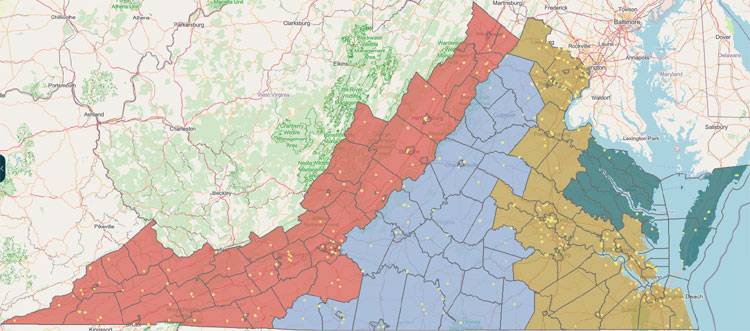
The reports don’t describe an aquifer in imminent collapse, and DEQ’s director has described the overall system as “basically in balance” with only a slight negative trend for now. But the consistent message across both the state and federal analyses is that the margin for additional demand — from growth, agriculture, or industry — is thin to nonexistent in much of eastern Virginia, and thinnest of all on the Shore, where there is no alternative freshwater source to fall back on if the aquifer degrades.
This story draws on the DEQ and USGS reports along with subsequent coverage from Bay Journal, Virginia Mercury, VPM, WAVY, WBOC and the Chesapeake Bay Foundation. Direct quotations from officials are attributed to those outlets’ reporting.
About the Author


I have a great idea;
how bout’ we finance and build many many new homes with big yards and swimming pools to bring in many many wealthy people and their freinds and families. That should certainly help alleviate the ground water situation.