
This week at the United Nations General Assembly in New York, President Trump, Danish Prime Minister Mette Frederiksen, and Greenland Prime Minister Jens-Frederik Nielsen signed a new security agreement for the world’s largest island.
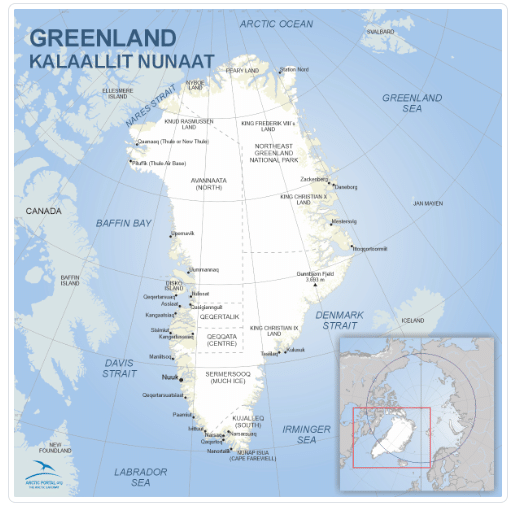
The U.S. will modernize and expand Pituffik Space Base in the northwest and add new defense sites at Narsarsuaq in the south and Mestersvig in the east. American aircraft get landing rights across Greenland and its waters, no country outside NATO can put a military installation on the island without unanimous approval, and investors from outside NATO and the EU are shut out of sensitive sectors. The agreement has no expiration date, and it stays in force even if Greenland becomes independent.
Nielsen called it “a win-win-win,” and Frederiksen called it “a deal that can last forever.”
America has had its eye on Greenland for more than 150 years.
1867: Seward looks north
Right after buying Alaska from Russia, Secretary of State William Seward had his State Department study buying both Greenland and Iceland. His critics mocked Alaska as “Seward’s Folly,” but history tells us how that played out.
1917: A deal in the Caribbean
When the U.S. bought the Danish West Indies (today’s U.S. Virgin Islands) for $25 million in gold, Washington also formally recognized Denmark’s claim over all of Greenland. It’s a small footnote that turned out to matter a lot.
1941: America steps in
After Nazi Germany occupied Denmark, the Danish ambassador in Washington signed an agreement putting Greenland’s defense in American hands. The U.S. built airfields and weather stations across the island. One of them, code-named Bluie West One, sat at Narsarsuaq. That’s the same place this week’s deal names for a new base.
1946: Truman makes an offer
After the war, President Truman quietly offered Denmark $100 million in gold for the island. Denmark said no. In 1951, the two countries signed the Defense Agreement instead, and Thule Air Base (now Pituffik) went up soon after. This week’s deal builds directly on that 1951 framework.
2019 to today
When President Trump first raised buying Greenland in 2019, Denmark called it “absurd.” Seven years later, with China and Russia pushing into the Arctic and new shipping lanes opening as the ice shifts, the same three governments are shaking hands on a deal that gives America the security role it has been playing, unofficially, since 1941.
Greenland, the world’s largest island, separates the Arctic Ocean from the Atlantic and covers an area of about 2.17 million square kilometers, of which roughly 410,000 square kilometers are free of permanent ice. The vast majority of its surface is covered by the Greenland Ice Sheet, the second-largest body of ice in the world after Antarctica.
With the exception of a few sheltered areas in the south, Greenland’s climate is classified as Arctic. Even during the warmest month of the year, average temperatures rarely exceed 10°C (50°F), although climate change has brought increasing seasonal variability and record-breaking summer temperatures in recent years.
Greenland sits between North America and Europe, right on the shortest routes for ships, planes, and missiles crossing the top of the world. It holds rare earth minerals the modern economy depends on. Whoever has influence there has a say over the Arctic. As of this week, that’s the United States and its allies, and not Beijing or Moscow.
About the Author




The main qualification required is that he not be born and raised on The Eastern Shore of Virginia.
Look's like Cape Charles is planning ahead. With the potential expansion into Northampton County and more than a Tenfold increase…
Duh... First, we'll kill the Menhaden and enrich Omega and their Politician friend$. Then, the Chesapeake Bay and all of…
A southern democrat.
Hey "Bob" I take your comment as if this was coming from an idiot. How about using your real name…