
Across Virginia, gardeners are rediscovering something many of the state’s native bees already knew: native plants matter.
From the Eastern Shore’s sandy soils to the Piedmont’s rolling hills and the mountain forests of western Virginia, native flowering plants provide critical food and habitat for pollinators struggling against habitat loss, pesticides, and climate pressures. While honeybees often receive most of the attention, Virginia is home to hundreds of species of native bees, along with butterflies, moths, hummingbirds, beetles, and other pollinating insects that keep ecosystems — and agriculture — functioning.
Experts say one of the most effective ways homeowners can help is surprisingly simple: plant native species.
Native plants evolved alongside local pollinators over thousands of years. Their bloom times, flower shapes, pollen chemistry, and nectar production are naturally synchronized with the insects and birds that depend on them. Many ornamental imports may look attractive to humans, but offer little value to wildlife.
For gardeners hoping to create a thriving pollinator habitat, Virginia offers no shortage of beautiful options.
Spring Bloomers: Early Fuel for Emerging Bees
When temperatures begin to rise, native bees emerge hungry and in search of nectar and pollen. Early-blooming native plants can be lifesavers.
Eastern Redbud
Eastern Redbud
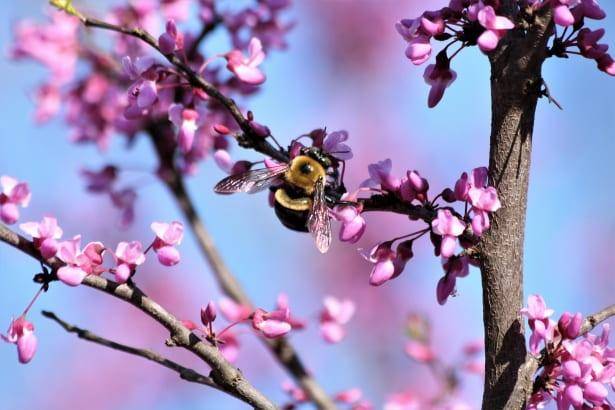
One of Virginia’s most recognizable spring trees, the Eastern Redbud erupts in pink-purple blossoms before its leaves appear. Native bees flock to the flowers in early spring when few other nectar sources are available.
Redbuds thrive in partial shade or full sun and fit well into both formal landscapes and naturalized yards.
Wild Columbine
Wild Columbine


With delicate red-and-yellow flowers, Wild Columbine attracts hummingbirds as well as long-tongued bees. It performs well in woodland gardens and rocky areas and often reseeds naturally.
Golden Alexanders
Golden Alexanders
Clusters of bright yellow blooms provide an important nectar source in mid-spring. The plant also serves as a host species for Black Swallowtail butterflies.
Summer Stars: Peak Pollinator Season
Summer is when Virginia gardens can become truly alive with buzzing insects and fluttering butterflies.
Bee Balm
Bee Balm


Few native plants attract more activity than Bee Balm. Its shaggy red, pink, or purple blooms are magnets for bees, butterflies, and hummingbirds.
Part of the mint family, Bee Balm spreads readily and works especially well in meadow gardens or larger pollinator beds.
Purple Coneflower
Purple Coneflower


A staple of pollinator gardens, Purple Coneflower provides nectar throughout summer while later supplying seeds for goldfinches and other birds.
Its sturdy stems and drought tolerance make it especially valuable during Virginia’s hotter summers.
Milkweed
Butterfly Milkweed
Swamp Milkweed


Milkweeds are perhaps best known for supporting Monarch butterflies, whose caterpillars feed exclusively on the plant. But bees and other pollinators also heavily use the flowers.
Butterfly Milkweed prefers drier soils, while Swamp Milkweed thrives in wetter conditions.
Mountain Mint
Mountain Mint
Often overlooked in ornamental gardening, Mountain Mint may be one of the best pollinator plants available. On warm summer days, its tiny flowers can host dozens of insect species simultaneously.
Gardeners should be prepared for vigorous growth, but the ecological payoff is enormous.
Fall Bloomers: Vital Late-Season Resources
As summer fades, pollinators continue preparing for winter. Late-blooming natives become essential.
New England Aster
New England Aster

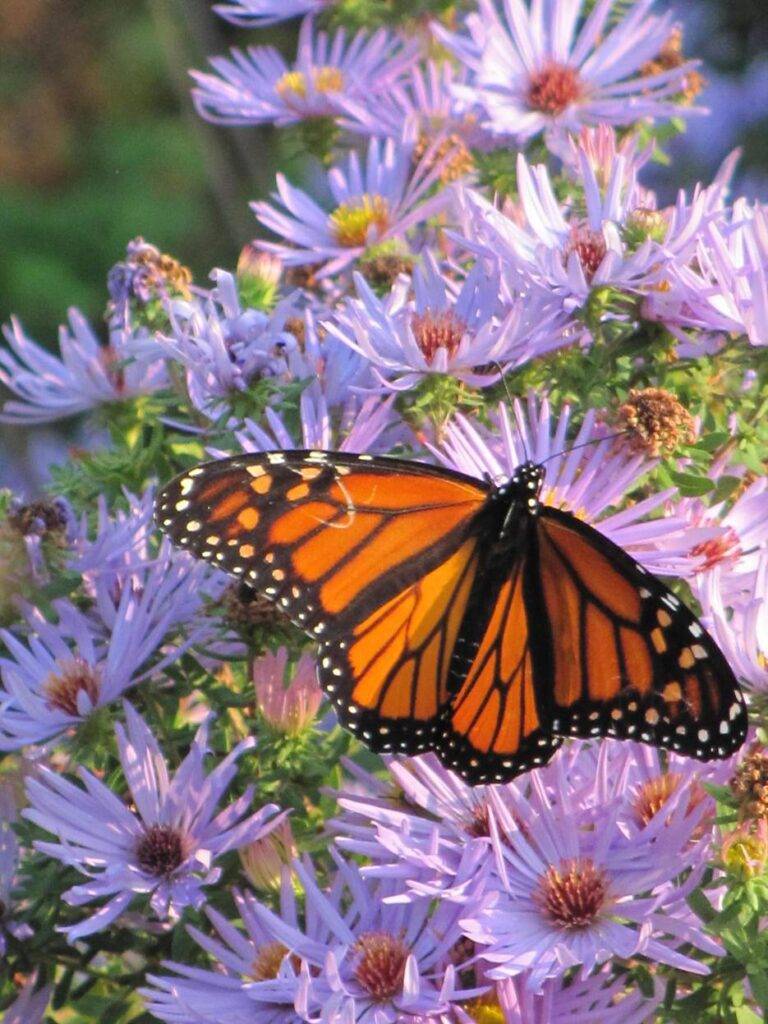


The vivid purple blooms of asters are among the last major nectar sources available before cold weather arrives.
Migrating Monarch butterflies and numerous bee species rely heavily on these late-season flowers.
Goldenrod
Goldenrod

Despite its bad reputation, Goldenrod does not cause hay fever — ragweed is usually the culprit. Goldenrod is actually one of the most important fall pollinator plants in North America.
Its bright yellow plumes support bees, wasps, butterflies, and beneficial insects deep into autumn.
Beyond Flowers: Creating Habitat
Pollinator gardening is about more than blooms.
Native bees often nest in bare soil, hollow stems, fallen wood, or leaf litter. Leaving portions of the garden “messy” through winter can dramatically improve survival rates for overwintering insects.
Experts also recommend:
- Avoiding pesticide use whenever possible
- Planting in clusters rather than isolated specimens
- Including plants that bloom from early spring through late fall
- Providing shallow water sources
- Leaving seed heads standing through winter
Even small spaces can help. A balcony planter, townhouse garden, or narrow border filled with native species can become an oasis for pollinators in increasingly developed landscapes.
A Growing Movement in Virginia
Across the Commonwealth, native plant sales, pollinator pathways, and habitat certification programs are growing in popularity. Conservation groups and gardening clubs say interest has surged as residents become more aware of declining insect populations and the ecological importance of pollinators.
For many gardeners, the reward is immediate.
A yard planted with native flowers quickly becomes more dynamic — filled with the hum of bumblebees, the flash of butterflies, and the seasonal rhythms that connect people more closely to the natural world around them.
And in Virginia, nature already provides the perfect blueprint.
About the Author



It is none of your damn business how much water the concrete plant uses. You seem like a busy body.…
According to the Cape Charles Mirror (10/11/26), in the article on “Cape Charles Advances Municipal Building, Harbor Boardwalk and Infrastructure…
Thank you very much for your prompt edit 😊
You’ve posted a photo of Eyre Hall. This can be very misleading. Please correct. Editor's Note: Thanks for the catch!…
Issue #1: This statement lacks clarity about the treatment process for drinking water in Cape Charles, VA: The measurements presented…